


What is wisdom? Is it simply being intelligent? Is it knowing a lot about the Bible? Or is it something deeper—a God-given ability to know what is right and to know how to apply God’s truth to the circumstances of life?
In his first letter to the church at Corinth, the Apostle Paul lists wisdom among the gifts given by the Holy Spirit:
“We have different kinds of gifts, but the same Spirit distributes them. There are different kinds of service, but the same Lord. There are different kinds of working, but in all of them and in everyone it is the same God at work. Now to each one the manifestation of the Spirit is given for the common good. To one there is given through the Spirit a message of wisdom, to another a message of knowledge by means of the same Spirit.”
—1 Corinthians 12:4–8
The gift of wisdom is more than intelligence or education. It is a special ability, given by the Holy Spirit, to understand God’s truth and apply it wisely to the situations we face. It helps us see beyond the obvious and recognize what is true, right, and pleasing to God.
And like every spiritual gift, it is not given to make the person who possesses it look impressive. Paul says that the gifts are given “for the common good.” The purpose of wisdom is to help other people and to build up the body of Christ.
The Bible repeatedly connects wisdom with a reverence for God. Proverbs 9:10 says, “The fear of the Lord is the beginning of wisdom.” Biblical wisdom begins when we recognize that God knows more than we do and that His ways are ultimately better than ours.
One of the best examples is Solomon. When God offered Solomon the opportunity to ask for whatever he wanted, Solomon did not ask for wealth, long life, or victory over his enemies. Instead, he asked for “a discerning heart to govern your people and to distinguish between right and wrong” (1 Kings 3:9).
God granted his request.
Soon afterward, two women came before Solomon, each claiming to be the mother of the same baby. Solomon’s unusual solution revealed which woman was truly the mother. The people recognized that something more than ordinary intelligence was at work. Scripture says, “They saw that he had wisdom from God to administer justice” (1 Kings 3:28).
That is an important picture of biblical wisdom. Wisdom is not simply knowing the answer. It is knowing what to do with what you know.
The New Testament takes wisdom even further. Paul says of Jesus, “Christ the power of God and the wisdom of God” (1 Corinthians 1:24). Jesus did not merely teach wisdom. He demonstrated it through His life.
Think about the way Jesus responded to people. He knew when to speak and when to remain silent. He knew when to challenge someone, when to forgive, and when to show compassion. He could answer a difficult question with a simple statement that revealed the heart of the matter.
Jesus’ wisdom ultimately led Him to the cross. What appeared to the world to be weakness and defeat was actually God’s plan for the salvation of humanity. Through His death and resurrection, God demonstrated a wisdom far beyond human understanding.
James tells us that if we lack wisdom, we should ask God, “who gives generously to all without finding fault” (James 1:5).
That is an encouraging promise. Wisdom is not reserved for scholars, pastors, or highly educated people. God gives wisdom to ordinary people who sincerely seek Him.
What Does the Gift of Wisdom Look Like? The gift of wisdom may appear in many different ways.
It may be the Christian who knows exactly what to say when a friend is struggling. It may be a parent who recognizes what a child really needs rather than simply reacting to the child’s behavior. It may be an elder who helps settle a disagreement within the church. It may be a teacher who takes a difficult biblical truth and explains it in a way that suddenly makes sense.
Sometimes wisdom appears in leadership. A wise Christian leader can see consequences that others have overlooked and help people make decisions that honor God.
Sometimes it appears in counseling. A person with the gift of wisdom may listen carefully and recognize that the problem being discussed is not really the deepest problem at all.
And sometimes wisdom is as simple as knowing when NOT to speak.
James gives us a valuable test for recognizing godly wisdom. He says that the wisdom that comes from above is “pure; then peace-loving, considerate, submissive, full of mercy and good fruit, impartial and sincere” (James 3:17).
In other words, true wisdom produces good fruit.
The gift of wisdom is especially valuable in a world filled with information but often lacking discernment. We have more information available to us than any generation in history, yet information alone does not tell us what is right, what is wise, or what we should do.
That is where the gift of wisdom can serve the church.
Wisdom helps us distinguish truth from error, important things from merely urgent things, and lasting values from temporary cultural pressures. It helps us apply the timeless truth of Scripture to the complicated circumstances of everyday life.
But the person with the gift of wisdom should never draw attention primarily to himself or herself. The goal is not for people to say, “What a wise person!” The goal is for people to recognize the wisdom of God.
Perhaps that is the clearest mark of the gift.
Godly wisdom points beyond the person who possesses it to the God who gives it.
When the Holy Spirit gives someone the gift of wisdom, that person becomes a channel through which God’s truth can bring clarity, direction, peace, and understanding to others.
The gift of wisdom is therefore not about being the smartest person in the room. It is about being willing to listen to God, understand His truth, and faithfully apply it for others’ good.
Living Dialog Ministries takes the gift of wisdom seriously. We want to encourage men and women in their daily walk to exercise the gifts God has given them through the Holy Spirit. We also want to help those who have not yet entered into a personal relationship with God and allowed His gifts to be expressed to discover the joy and freedom of becoming a child of God. If you would like to enter into this relationship, please read our post: How Can I Become a Christian?.
_______________________
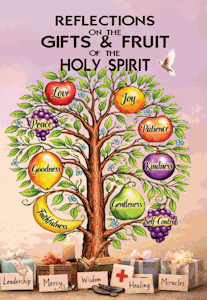
If you would like to learn more about the gifts of the Spirit, we encourage you to pick up our 32-page booklet, Reflections on the Gifts and Fruit of the Holy Spirit.
BNR