Few biblical books spark as much curiosity—and controversy—as the Book of Esther. It’s dramatic, humorous, politically sharp, and famously godless in its explicit language. Yet it sits firmly in the canon of Scripture for Jews and Christians alike. How did it get there, and why does it matter?
Consider this: the book of Esther has it all:
Esther’s path into the biblical canon was not smooth. Ancient Jewish and Christian writers were divided over whether it belonged in Scripture. Many Jewish communities embraced Esther early because it explained the origins of Purim, a major festival. The book’s inclusion in the Hebrew Bible reflects this acceptance.
However, some ancient writers were skeptical. For example, Jerome, translator of the Latin Vulgate, noted that the Greek additions to Esther differed significantly from the Hebrew version and expressed doubts about their authenticity. Some early Christian leaders questioned the book because it lacked explicit references to God.
It’s true that God is never mentioned directly in the book of Esther. It’s also true that in the Hebrew version, there is no prayer. The book, instead, focuses heavily on political intrigue and personal courage. Yet despite these concerns, the book remained beloved in Jewish tradition and eventually secured its place in Christian Scripture. That’s due to the fact that Esther’s story
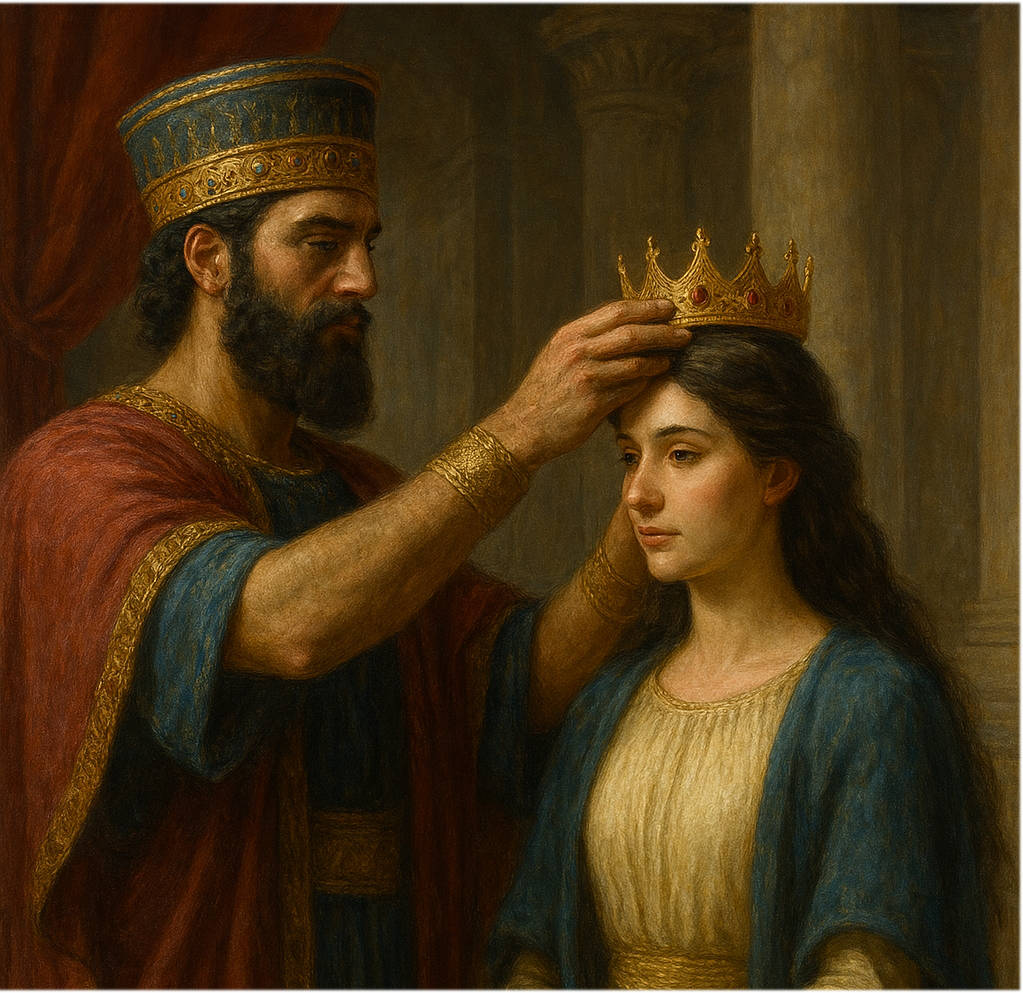
For Christians, Esther is more than a novella or simple story of redemption; Esther, the queen of a great Persian King, is viewed as a foreshadowing of Jesus. Consider the following:
Scholars debate the historical accuracy of the book of Esther. Many observe that Persian court customs described in Esther match what is known from Persian history. Names like Mordecai and Esther fit the period. However, no existing Persian records mention a Queen Esther or a person named Mordecai being honored by King Xerxes. That’s why some modern scholars conclude that Esther is a story rooted in real cultural context but shaped for theological and literary purposes.
Esther is a book for anyone who has ever wondered where God is in the chaos of life. Its message is timeless: God is hidden, but never absent. However, for Christians, God is no longer hidden. He is alive in the hearts and minds of everyone who confesses Jesus as savior and allows the Holy Spirit to guide his or her daily life. If you would like to know a redemption that is everlasting, please read our post: How does one become a Christian?

Answers to Life’s Greatest Questions is provided by Living Dialog Ministries. Visit our website at LivingDialog.org where you’ll see the wide range of books and booklets to help you go deeper in the study of God’s Word.