

When Paul lists the spiritual gifts in Romans 12, he writes simply,
We have different gifts, according to the grace given to each of us. If your gift is prophesying, then prophesy in accordance with your faith; if it is serving, then serve; if it is teaching, then teach; if it is to encourage, then give encouragement; if it is giving, then give generously; if it is to lead, do it diligently; if it is to show mercy, do it cheerfully. Romans 12:6-8
It sounds almost ordinary. Yet teaching is one of the gifts through which God has built, strengthened, and preserved His Church for nearly 2,000 years.
The gift of teaching is the Spirit-given ability to take the truth of God and make it understandable, meaningful, and applicable. It may happen from a pulpit, in a Sunday school classroom, through an online Bible study, around a kitchen table, or one-on-one over a cup of coffee. Wherever God’s Word is being carefully explained and faithfully applied, the gift of teaching can be at work.
But teaching is more than knowing the Bible. A person can possess enormous biblical knowledge and still fail to communicate God’s truth. The gifted teacher does more than explain what Scripture says; he or she helps people see what it means and how it should shape their lives. Ultimately, teaching is not merely knowing the Word; it is knowing the One from whom the Word flows. Jesus said that the Scriptures testify about Him (John 5:39). The goal of Christian teaching, therefore, is not simply informed minds but transformed lives and a deeper knowledge of Christ.
The early church understood this. Paul identified “teachers” as an important ministry in the body of Christ,
So Christ himself gave the apostles, the prophets, the evangelists, the pastors and teachers, to equip his people for works of service, so that the body of Christ may be built up until we all reach unity in the faith and in the knowledge of the Son of God and become mature, attaining to the whole measure of the fullness of Christ. Ephesians 4:11-13
The Great Commission itself included Jesus’ command to make disciples by “teaching them to observe all that I have commanded you” (Matthew 28:19–20).
From the preaching of the apostles to the instruction of the early church, through the writings of Augustine and John Chrysostom, the theological work of Thomas Aquinas, the Reformers, and generations of pastors, teachers, missionaries, and parents, Christian teaching has carried the faith from one generation to the next. Chrysostom’s extensive exposition of Romans itself demonstrates how seriously the early Church regarded careful instruction in Scripture.
But not everything called “Christian teaching” is Christian teaching. Scripture warns against false teachers and “every wind of teaching” that can deceive believers (Ephesians 4:14). The teacher has a solemn responsibility to handle God’s truth faithfully—and the listener has a responsibility as well.
We are not called to believe everything we hear simply because it comes from a pulpit, classroom, podcast, or Bible study. Like the Bereans in Acts 17:11, we should listen carefully, examine Scripture, discern what is true, and respond accordingly. The teacher must faithfully proclaim the gospel; the hearer must faithfully receive, test, and live it.
The gift of teaching is therefore a sacred stewardship: to make God’s Word clear, so that people may know God’s Son, grow in truth, and follow Him faithfully.
Living Dialog Ministries takes the gift of teaching seriously. We want to encourage men and women in their daily walk and equip Christians to share God’s Good News with those around them. We also want to help those who do not yet know how to enter into a personal relationship with God to discover the joy and freedom of becoming a child of God. If you would like to enter into this relationship, we encourage you to visit our post: How Can I Become a Christian?.
_______________________
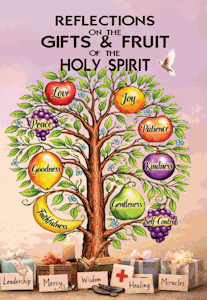
If you would like to learn more about the gifts of the Spirit, we encourage you to pick up our 32-page booklet, Reflections on the Gifts and Fruit of the Holy Spirit.